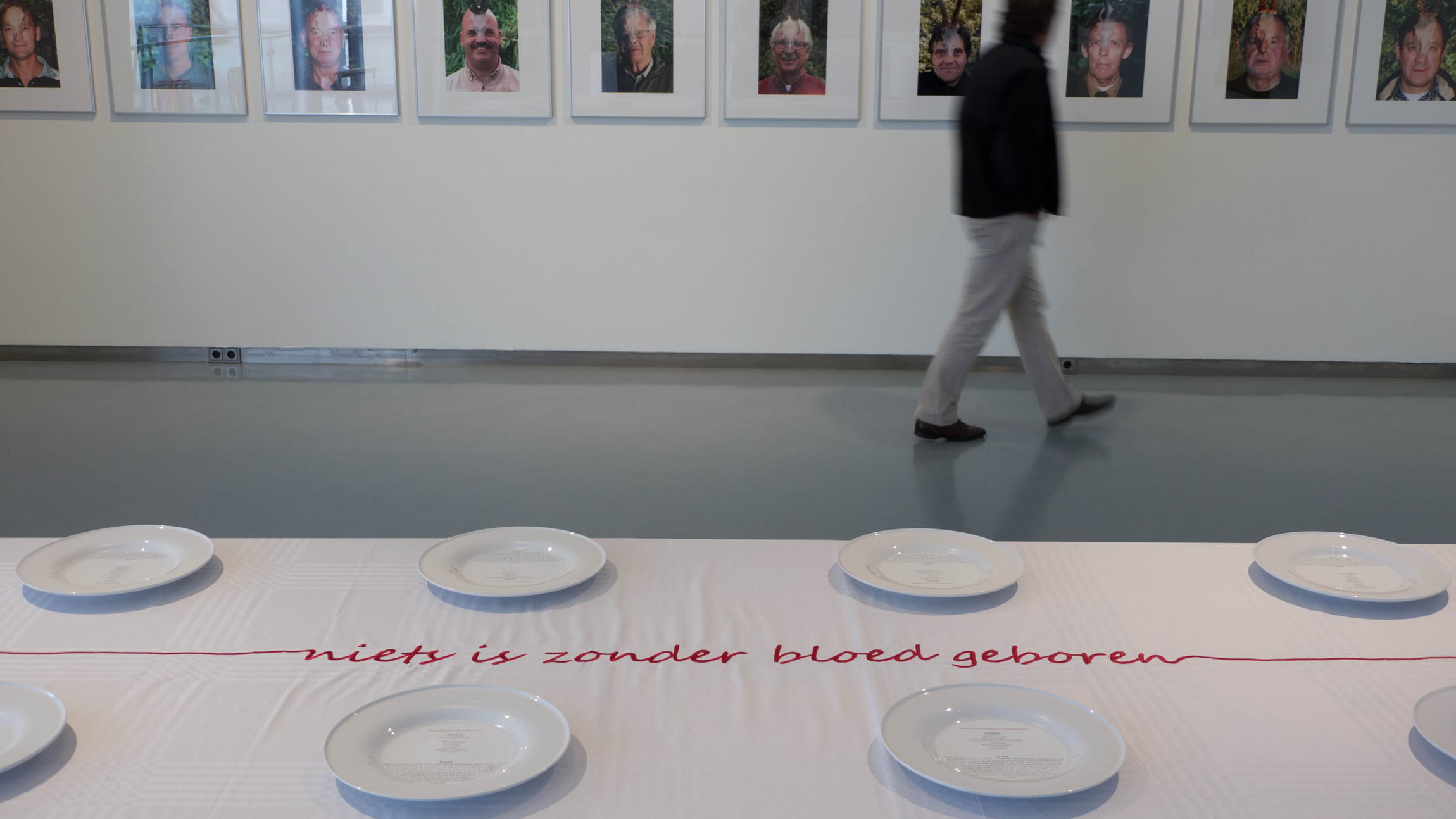
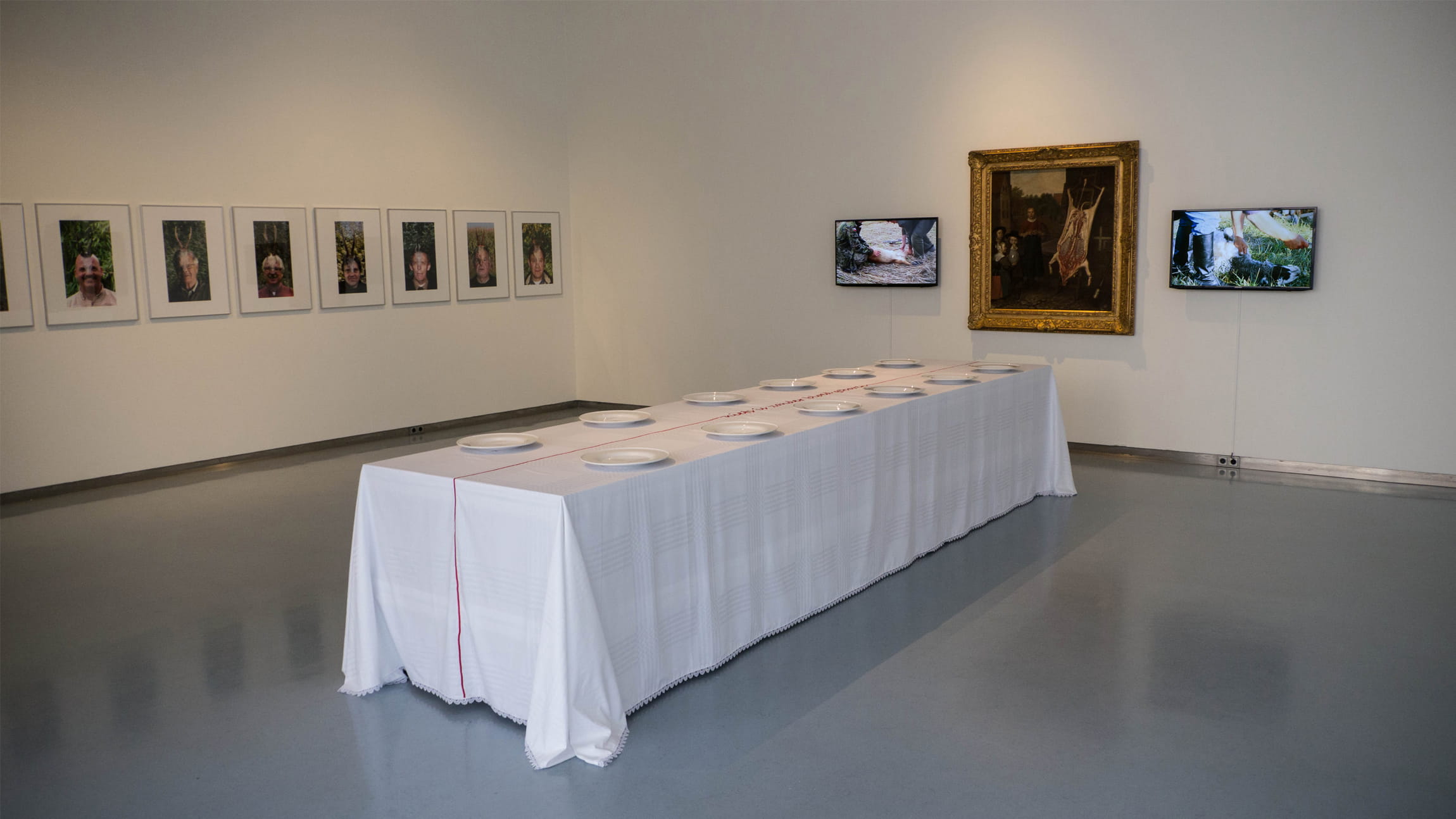
For the exhibition Rituals at the Stedelijk Museum Zwolle, Loes Heebink developed the installation “Nothing is Born Without Blood.” The work departs from Hendrik ten Oever’s painting “The Slaughtered Pig” (1670), part of the museum’s collection, and explores the cultural, personal, and ritual layers associated with slaughter and hunting.
The installation consisted of several components that together formed a contemporary triptych. Two video works featuring Mongolian slaughter rituals and poetic texts were presented alongside Ten Oever’s painting, bringing the past and present directly together.
In the center of the room stood a table set with twelve plates, each printed with a recipe for preparing roe deer—a reference to traditions in which the entire animal is used, and in which care, respect, and necessity converge.
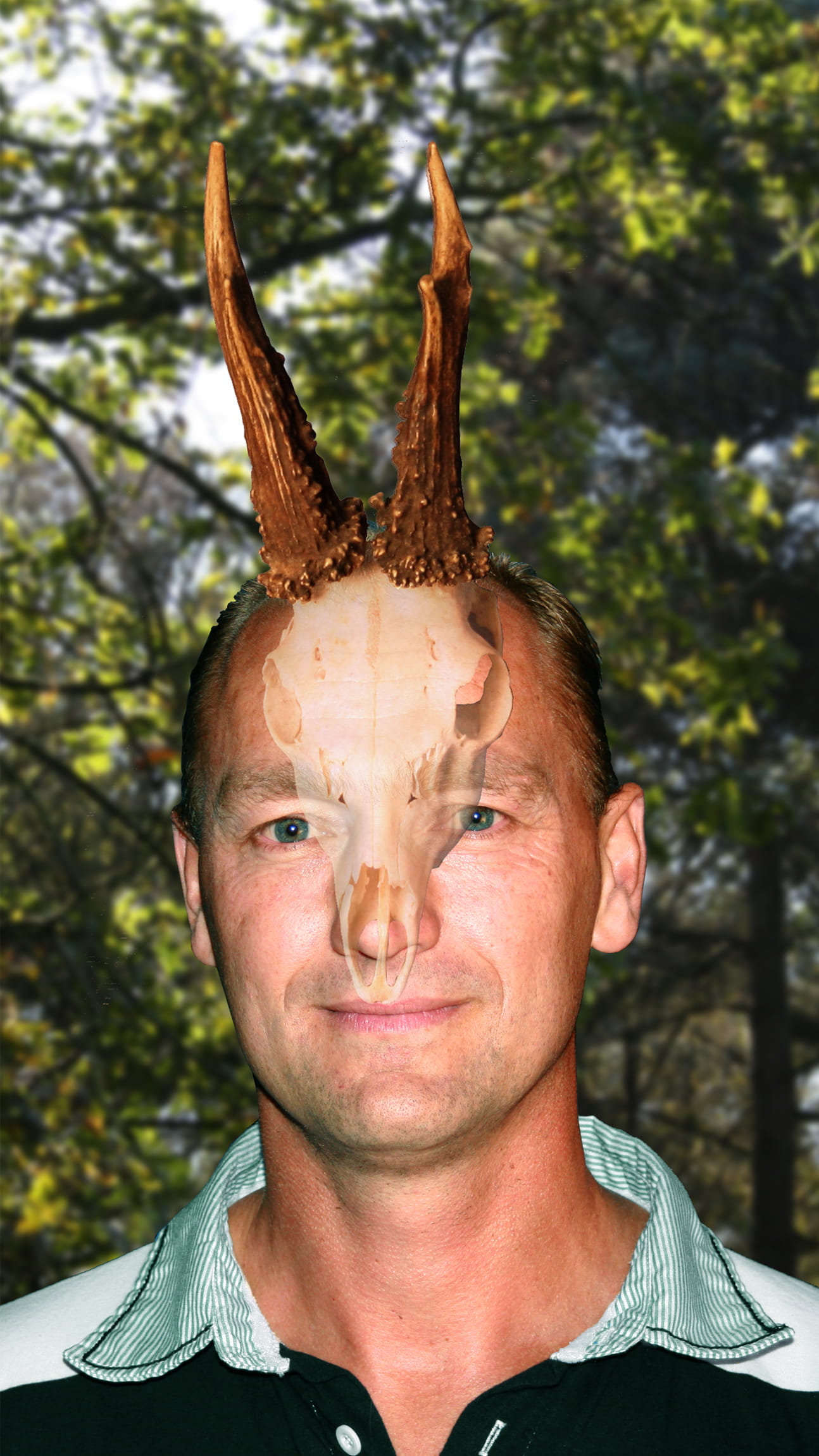
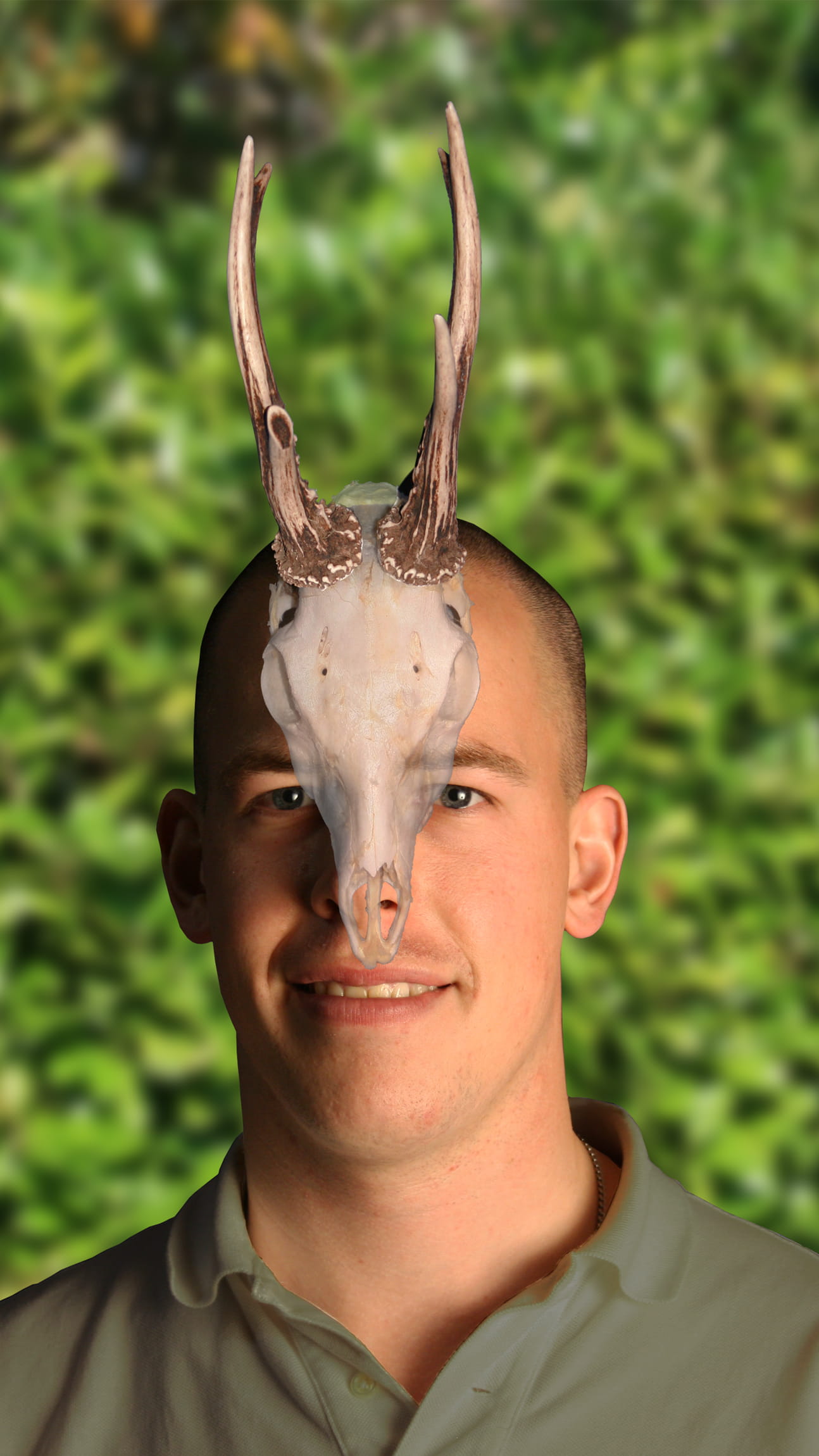
On the wall in the same room hung a series of eleven photographic works: portraits of hunters, combined with double images of their most memorable roe deer trophy.
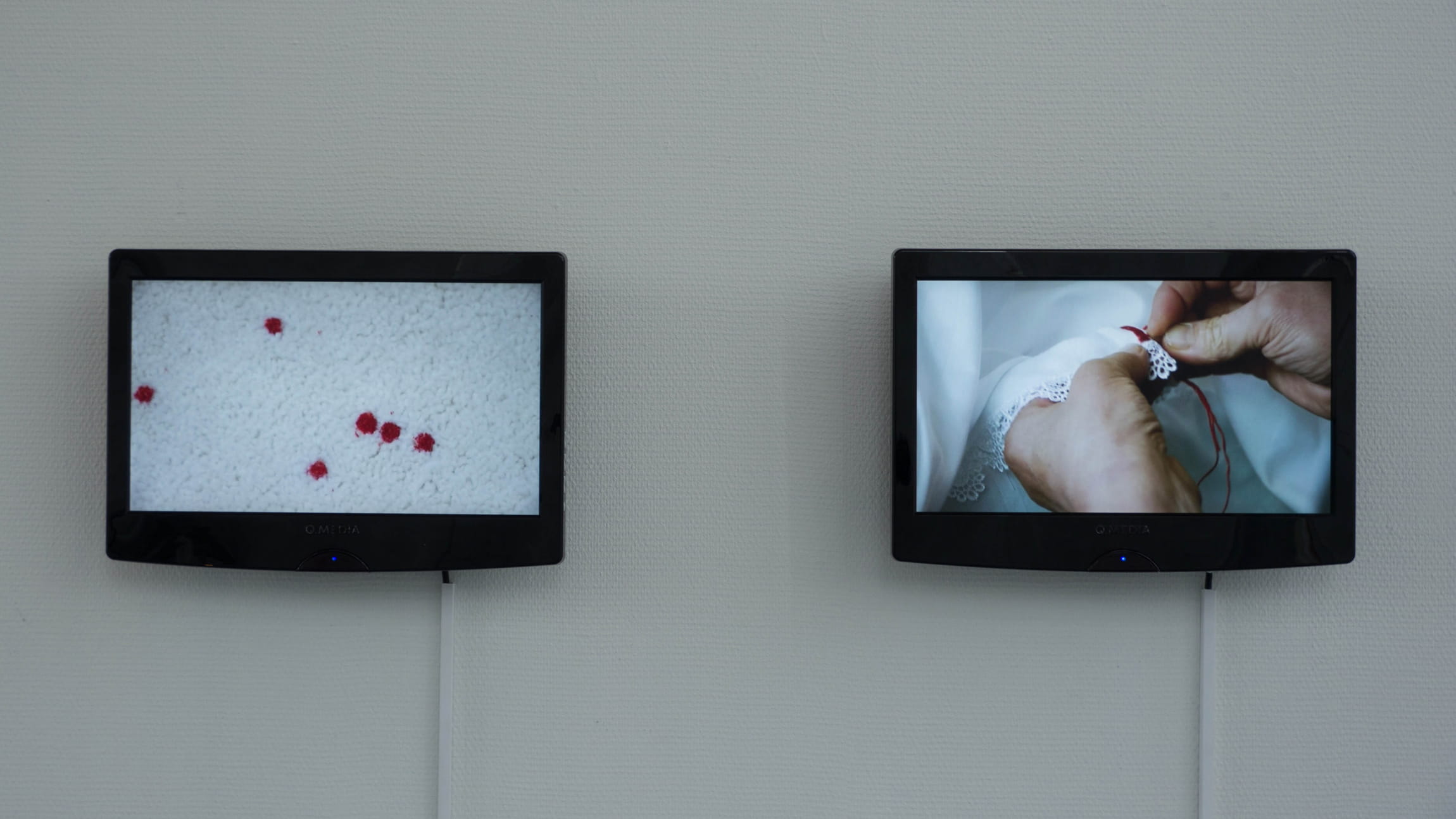
Besides this museum-like dialogue, Heebink also introduced personal layers into the work. A video about her mother showed the embroidering of a damask tablecloth for the installation, in which an unintentional bloodstain from a finger prick became a silent yet poignant presence.
In a second video, the artist directly connected the theme to her own body, reflecting on the autoimmune disease ITP, which she had recently been diagnosed with. The risk of exsanguination made the theme of blood and vulnerability painfully tangible.
With “Nothing is Born Without Blood,” Heebink weaves art historical context, cultural rituals, and personal experience into a layered whole. The work questions the human relationship to animals, food, and the body, and shows how rituals—both collective and intimate—give meaning to transience and survival.
The theme of this project later found an unexpected echo in a new context: the design Heebink created in 2025 for the State Hall of the Province of Drenthe. Here too, “Nothing is born without blood” served as the starting point, with the artist translating the underlying symbolism of blood, life, and continuity into a contemporary public space. Although this design was ultimately not realized—a proposal from a fellow artist was chosen—it demonstrates how the artistic questions and images from the installation continue to resonate beyond their original presentation. The project thus continued as a conceptual framework: a reflection on how art can be rooted in heritage while simultaneously guiding the design of public space.
Meer projecten
