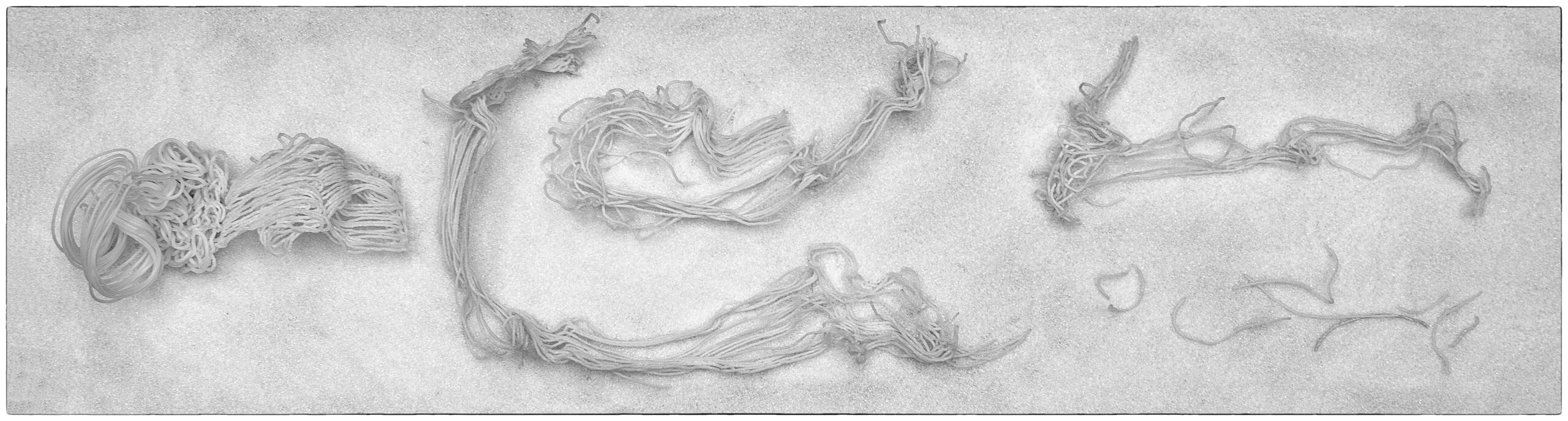
The Skeleton series originated from a fundamental question: can the plexi-ash, the residue of a previous work, be reduced to a new, clear raw material, bypassing the industrial chain?
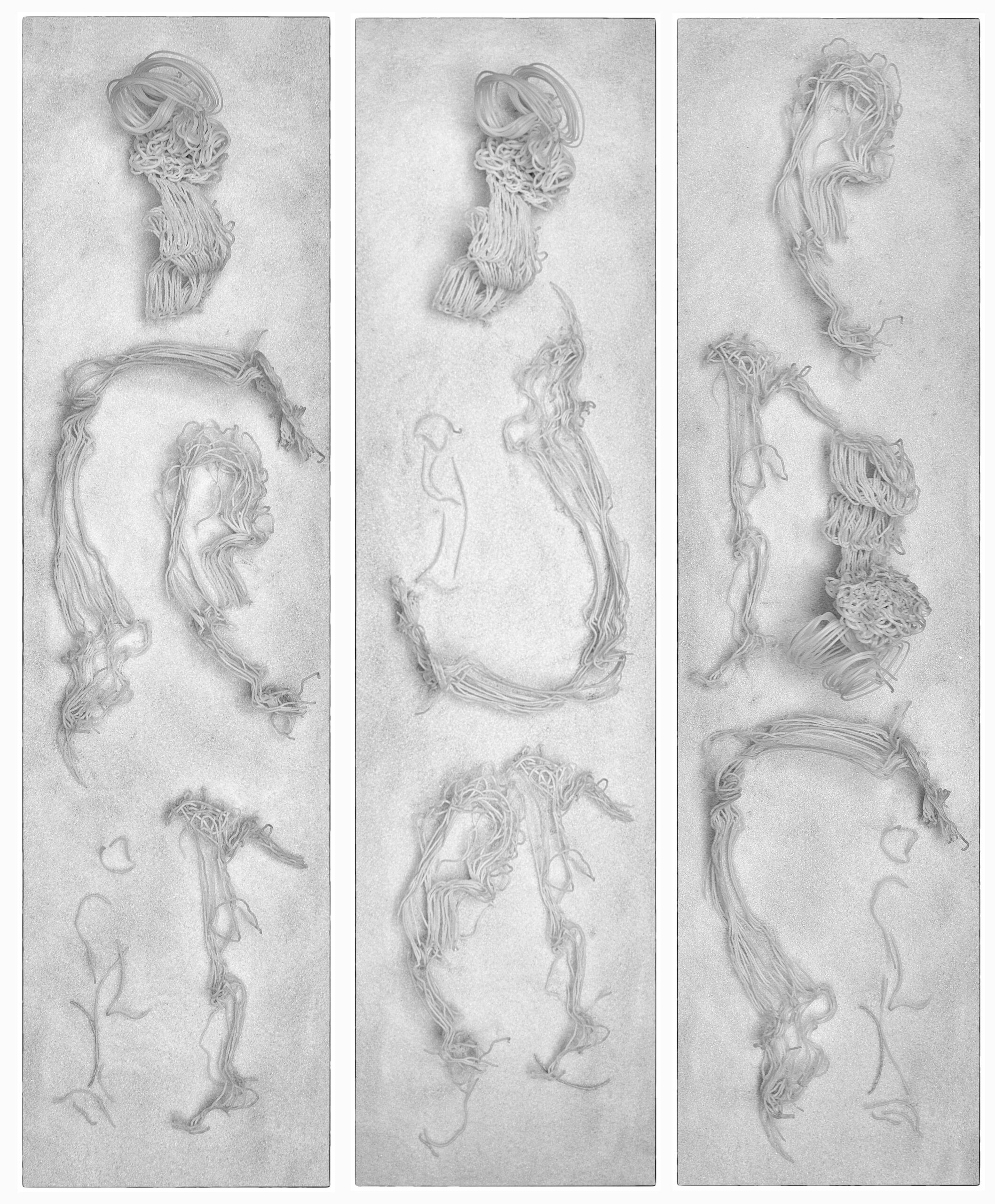
In collaboration with experimental workshops, it was investigated whether the material could be remelted and extruded into transparent sheets. Instead of the expected clarity, something else emerged: the granulate did not melt completely, but formed strands of fused grains. Structures reminiscent of bone tissue or coral. What began as a technical ‘failure’ became a new visual language. The Skeleton series consists of three works in which these fragile, skeletal forms take center stage, remnants organizing themselves into a new body.
At the same time, this process revealed the limits of circular working. While the idea of reuse seems simple, the practice proves to be complex and restricted. High-quality recycling of PMMA (plexiglass) takes place via specialized processes such as depolymerization, in which the material is reduced to its original monomer. These technologies are in the hands of the industry and require certified waste streams. Individual return proves to be hardly possible; the material is quickly classified as waste by law and requires a regulated route via recognized processors.
What becomes apparent is a paradox: the material is abundant and originates from fossil residual streams, and could therefore be a valuable raw material for the future, a form of ‘new gold’. At the same time, access to reuse is complex, costly, and heavily controlled.
The Skeleton series operates precisely within this field of tension. Between control and chance. Between industry and autonomy. Between what disappears and what, unexpectedly, reforms itself.
Meer projecten
